


Understand your symptoms in under 5 minutes.
Take the clinically validated Menopause Rating Scale — so you and your provider can make informed decisions together.

Why Your Clinician Uses Amissa
Amissa helps you share your menopause symptoms with your clinician in a clear, consistent way — so your care reflects what's happening between visits, not just what you remember in the room.
Validated Assessments
Uses trusted clinical tools — like the Menopause Rating Scale (MRS) — so symptoms are captured in a way clinicians recognize and use.
Daily Symptom Tracking
A simple way to capture changes over time, without trying to remember weeks of symptoms during an appointment.
See Wearable Data
If you use a wearable, Amissa can add helpful context like sleep or activity — alongside your symptoms — to give your clinician a fuller picture.
Wearables are optional and never required.
Private & Secure
Your information stays within your care. It's encrypted and shared only with your clinician — never sold or used for advertising.
Used by your care team to support your menopause care
Why is Symptom Tracking Important?
Menopause symptoms can be unpredictable and vary greatly from woman to woman. Tracking your symptoms helps you and your healthcare provider make informed decisions about your care.
Identify Patterns
Discover what triggers your symptoms and what helps reduce them over time.
Personalize Treatment
Work with your provider to find treatments that address your specific symptoms.
Understand Your Body
Gain insights into how menopause affects your physical and emotional wellbeing.
Take Control
Feel empowered with data-driven insights about your health journey.
80%
of women experience menopause symptoms
7+ yrs
average duration of symptom experience
34+
recognized menopause symptoms
 How It Helps Your Care
How Symptom Sharing Supports Your Visit
This fits into your care behind the scenes — no extra messages, no prep work before appointments.
Get Started Pre-Appointment
The Menopause Rating Scale is 11 questions
Track overall changes with a validated clinical tool that helps your care team understand symptom severity over time.
Log Symptoms Daily in Amissa
In under two minutes
You capture things like sleep, mood, hot flashes, pain, and energy — when they happen, not weeks later.
Your Data Is Organized for Your Clinician
Summarized and ready
Your symptom data (and wearable context, if connected) is summarized into clear trends for your care team — not buried in portal messages or scattered notes.
Your Visit Starts Further Along
Less explaining, more deciding
Your clinician comes in already understanding patterns over time — so you spend less time explaining and more time deciding what to do next.
Wearable IntegrationWearable Insights Your Clinician Can Use
If you use a wearable device, Amissa can securely organize select signals — like sleep, activity, or heart rate — alongside your symptom tracking.
What Kind of Data Can Be Shared
- Sleep patterns and changes over time
- Activity levels and recovery
- Heart rate trends
- Heart palpitations
Why Your Clinician May Find This Helpful
- Adds context to symptoms like fatigue, sleep disruption, or hot flashes
- Helps identify patterns that aren't obvious day to day
- Supports more focused, informed conversations during visits
You Stay in Control
Connecting a wearable is completely optional. You can choose what to share — and disconnect at any time.
Works With Popular Wearables




Some patients track symptoms only. Others choose to add wearable context. Both are supported.
Get StartedWhat Your Clinician Sees
Your tracking empowers your healthcare team with the insights they need to provide exceptional, personalized care.
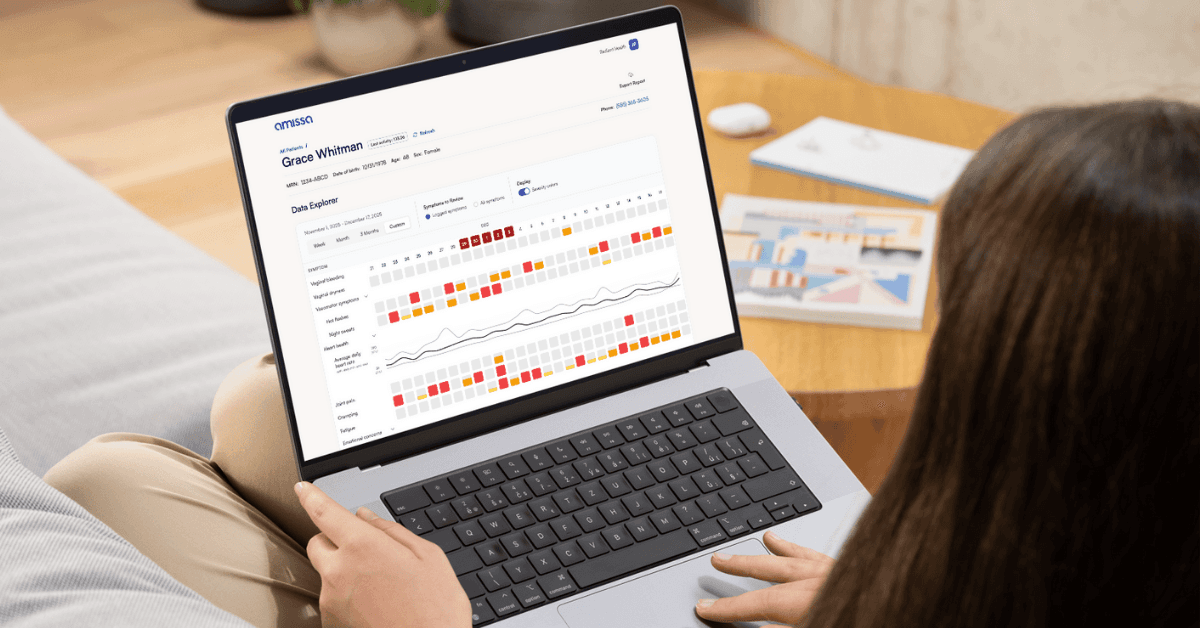
Symptoms Over Time
Your clinician sees your complete symptom history at a glance, identifying patterns you might miss.
Faster Adjustments
With real-time data, your care team can make quicker, more informed treatment decisions.
Better Care
Detailed trends help personalize your treatment plan for optimal results.
We're here to help
Have questions about using Amissa? Our team is ready to support you every step of the way.

Ready to Take Control?
Download Amissa to start tracking symptoms and sharing insights with your healthcare provider. Better data means better care.